1950s | Guitarists | Jazz | Player History
João Gilberto
Playlist
2 Videos

0:16

João Gilberto was born in Juazeiro, Bahia, the son of Joviniano Domingos de Oliveira, a wealthy merchant, and Martinha do Prado Pereira de Oliveira. He lived in his native city until 1942, when he began to study in Aracaju, Sergipe, returning to Juazeiro in 1946. At the age of 14, Gilberto got his first guitar from his grandfather despite disapproval from Gilberto’s father. Still, in Juazeiro, he formed his first band, called “Enamorados do Ritmo”. Gilberto moved to Salvador, Bahia, in 1947. During his three years in the city, he dropped out of his studies to dedicate himself exclusively to music and at the age of 18 began his artistic career as a crooner at the Rádio Sociedade da Bahia.
Gilberto’s first recordings were released in Brazil as two-song, 78-rpm singles between 1951 and 1959. In the 1960s Brazilian singles evolved to the “double compact” format, and Gilberto released some EPs in this new format, which carried four songs on a 45-rpm record. In 1956, he returned to Rio and struck up old acquaintances, most significantly with Antônio Carlos Jobim, who was by then working as a composer, producer, and arranger with Odeon Records. Jobim was impressed with Gilberto’s new style of guitar playing and set about finding a suitable song to pitch the style to Odeon management.
In 1963, Gilberto collaborated with American jazz musician Stan Getz on the album Getz/Gilberto which was released the following year. Jobim played the piano for the album while Gilberto’s then-wife Astrud performed the vocals in English while he sang in Portuguese.
Although Astrud Gilberto was only in the recording studio to be with her husband, João Gilberto requested her to sing on several of the tracks as he could not sing in English. This resulted with a duet between the two on the track “The Girl from Ipanema” which became a major hit from the album. At the 7th Annual Grammy Awards, Getz/Gilberto won three awards including Album of the Year, which marked the first time a jazz album received the accolade.

Willie Nelson Willie Hugh Nelson (born April 29, 1933) is an American musician, actor, and activist. The critical success of the album Shotgun Willie (1973), combined with the critical and commercial success of Red Headed Stranger (1975) and Stardust (1978), made Nelson one of the most recognized artists in country music. Playlist 3 Videos Always…

Al Di Meola Albert Laurence Di Meola (born July 22, 1954) is an American guitarist. Known for his works in jazz fusion and world music, he began his career as a guitarist of the group Return to Forever in 1974. Between the 1970s and 1980s, albums such as Elegant Gypsy and Friday Night in San…

Synyster Gates Brian Elwin Haner Jr. (born July 7, 1981), better known by his stage name Synyster Gates or simply Syn, is an American musician, best known for being the lead guitarist and backing vocalist of the band Avenged Sevenfold. The site’s tutorial videos are outstanding. Papa Gates is clear, concise, and that rare blend…
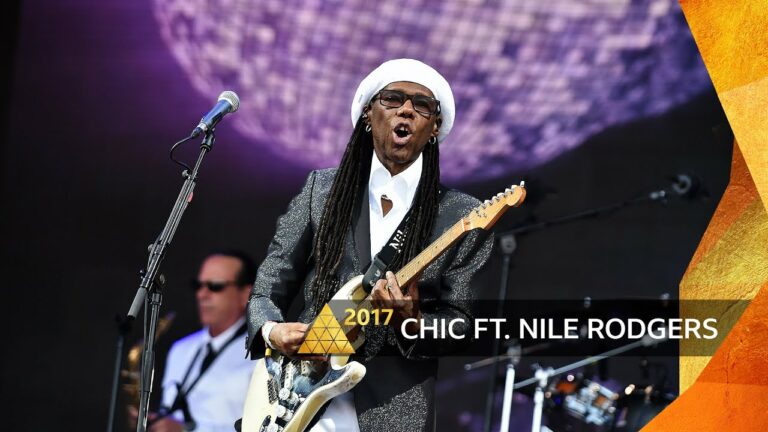
Nile Rodgers Nile Gregory Rodgers Jr. (born September 19, 1952) is an American guitarist, singer-songwriter, record producer, arranger, and composer. The co-founder of Chic, Rodgers has written, produced, and performed on albums that have cumulatively sold more than 500 million units and 75 million singles worldwide. He is a Rock and Roll Hall of Fame…
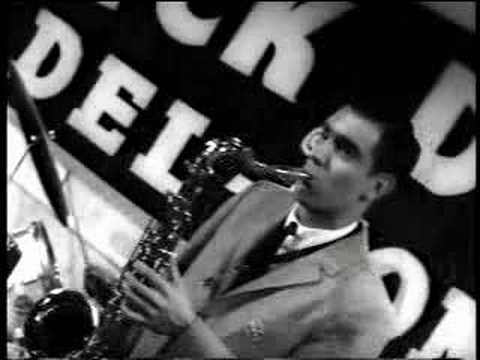
Dick Dale Richard Anthony Monsour (May 4, 1937 – March 16, 2019), known professionally as Dick Dale, was an American rock guitarist. He was a pioneer of surf music, drawing on Middle Eastern music scales and experimenting with reverberation. Dale was known as “The King of the Surf Guitar”, which was also the title of…
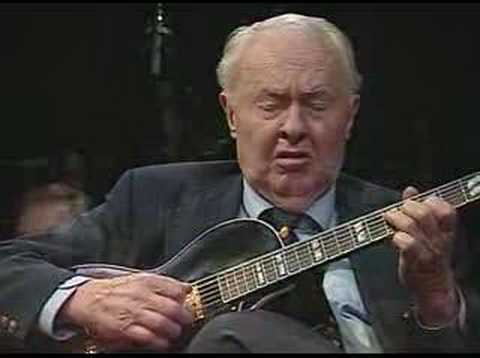
Herb Ellis Mitchell Herbert Ellis (August 4, 1921 – March 28, 2010), known professionally as Herb Ellis, was an American jazz guitarist. During the 1950s, he was in a trio with pianist Oscar Peterson. Born in Farmersville, Texas, and raised in the suburbs of Dallas, Ellis first heard the electric guitar performed by George Barnes…