Eric Johnson
Eric Johnson
John Wooden started coaching the UCLA basketball team in 1948 and it was 16 years, some of them pretty rough, until his team won its first national championship. He ultimately won 10 of them in 12 years, including seven in a row, and is considered by many to be the greatest college athletic coach of all time.
Similarly, in the case of Johnson, he started playing guitar in 1965 and joined his first professional band in 1969. He continued to play through some rough years until a major label, Warner Bros., finally signed him 17 years later. The same year, Guitar Player magazine ran a cover story on him.
From being mostly a regional success around his home in Austin, Texas, Johnson suddenly became known around the world. As soon as they heard his albums or saw him perform, audiences responded in growing numbers.
It wasn’t just his electric guitar pyrotechnics, but also the fact that whether he was mining Jimi Hendrix territory, blues rock, fusion or New Age music, his sound was always fluid, melodic, engaging and original.
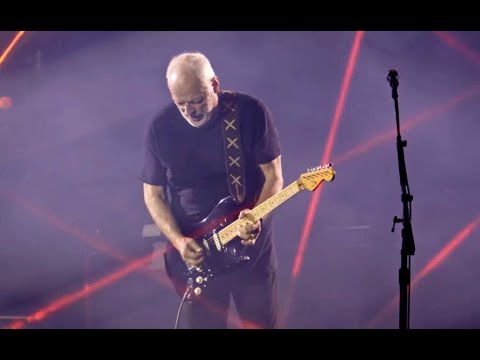
Johnson quickly ascended the guitar pantheon and now is recognized as among the instrument’s top virtuosos, a living legend who’s a member of Guitar Player’s Gallery of Greats and was included in the 100 Greatest Guitarists of the 20th Century selected by Musician magazine. Friday night, he headlines the first night of the 2012 Los Angeles Guitar Festival at the Redondo Beach Performing Arts Center.
Speaking via Skype from a hotel room in Rome at nearly 2 a.m., after he had just returned from playing at an outdoor festival, Johnson said that although there are long periods where he stays home in Austin and does nothing but write songs, he also likes to get on the road.
“In the last year or two, it’s been pretty much touring,” he said. “If there are nice opportunities, it’s great to get out and play for people.”
That’s understandable because of the adulation he encounters wherever he goes, but what about the lost time? How did he survive 17 years in the guitar wilderness before he found a way out?
“I’ve got a pile of rejection slips from record labels, booking agencies, you name it, in those years,” he said. “It was a lot of closed doors, but they’re only closed doors if they stop you. You run into a lot of roadblocks in the music business. You get a lot of people who tell you no. So you just go, `Well, I’ll keep playing, and I’ll keep trying to make it better, and I’ll try to learn from my mistakes and from feedback and criticism.’
“You have to always be brave and accepting enough and open enough and have enough passion to go to Plan B and Plan C and sometimes even Plan D. And then at one point, Christopher Cross really kind of put my name in the hat to Warner Bros., that maybe they should let me do a demo. And about the same time `Austin City Limits’ finally relented and put me on their show.”
He impressed Cross, the San Antonio singer-songwriter who became an international sensation himself with his 1980 Grammy-winning hit “Sailing,” while playing in Cross’ recording sessions.
While waiting for his break, Eric Johnson was earning money playing on recordings by such artists as Cross, Carole King and Cat Stevens.
As for the popular television music show that originated in Austin, he had tried repeatedly to convince the producers to give him a chance in front of the cameras, with no success.
“You just go, `Well, let me see what I can do on my own,”‘ he said of his frustration. “You go play this club to 10 people, and if you’re not good you go home and work it out to where you are good. And then you play for 15, 20, 50, 200. I got it up to where we were drawing 200 to 300 people a night and really expanding the territory, so `Austin City Limits’ was like, well, he’s got a following now, we might as well put him on. And once I got on that show, people saw it and put in a good word at Warner Bros. It kind of works like that.”
Being recognized for his accomplishments has obviously resulted in a jump in Johnson’s income, but he said he’s still performing for the same reasons he continued to perform during the lost years.
“In its simplest form, you’ve got to align yourself with what you play, why you do what you do and if you have a passion for it,” he said. “You do it because you love it, you have fun and you receive something from it. If you enjoy making music or whatever it is that your craft is, then there’s your payment. My best payment is the fact that I get an opportunity to do something I like to do. And along with that is to turn people on, have them go `Wow! You made me feel better tonight’ or `That got me through a hard time.’
“No amount of money or touring or concert halls or record deals are going to equal that. When you’re 18, you can think, `Well, as soon as I get this record deal I’ll be happy,’ or “As soon as I play this big auditorium I’ll be happy.’ Then as soon as you do it, you realize, well, no, that didn’t really do it. Once you have enough time doing what you’re doing, you realize that the simple things are the real payment. They’re the constructive things that keep you going.”
Most of Johnson career has been spent performing wonders on electric guitar. On Friday, most of his show will be playing in a rock power trio configuration with bassist Chris Maresh and drummer Wayne Salzmann II.
“I’ll probably just do a smattering of stuff off the records and then a few of other people’s tunes,” he said. “We’ll be jumping all over the place and doing different styles.”
But in the last few years, Eric Johnson has begun performing on acoustic guitar, too, and he said at some point Friday he’d probably sit down and do some acoustic numbers. When he does, many in the audience may be surprised, because not only will the sound be different, but so will his whole approach.
“I play a couple of chicken-picking fast country instrumental things, but for the most part, it’s folk songs,” he said. “My approach with acoustic is more songs and kind of folk, with a little bit of country and classical thrown in. I like that kind of vibe for acoustic, so I fingerpick and play songs.”
A stripped-down acoustic sound may be totally different from what’s made him a guitar legend, but there’s no inconsistency for Johnson, who sees it as just another aspect of the performance philosophy that got him through the 17 years of wandering in the wild.
“I just kept playing, because I loved it, and nobody could tell me it wasn’t good if it was making me happy,” he said.